Jumping between AI tools isn't the problem. Starting from zero every single session is. The fix is called the Motherboard - a small set of documents you build once that tell your AI who you are, how you work, and what your business is actually about. Once it's done, AI stops sounding generic. It starts sounding like you. No new apps required.
Quick note: some links in this post are affiliate links. If you sign up through one, we might earn a small amount at no extra cost to you. We only link tools we actually use. Full affiliate disclosure.
You signed up for ChatGPT. Then Claude. Then that new one everyone was posting about on Tuesday. You watched the YouTube tutorial, felt briefly amazing, opened a new chat, typed "help me with my business" and got back something so beige it made you want to close the laptop and make a coffee instead.
So you thought - maybe I need a different tool. Maybe there's a better one. Maybe I'm just not doing it right.
Here's the thing. It's not the tool. AI doesn't know you yet. And when AI doesn't know you, it gives you the same answer it gives a 25-year-old in a co-working space in San Francisco. Generic. Polished. Nothing like you. No wonder it feels useless.

Prefer to watch first? We break down building a second brain with AI when you have an ADHD brain in this one:
Why ADHD brains get stuck in the tool loop
The ADHD brain is wired for novelty. A new app is a hit of dopamine. The setup phase feels productive. There's hope in the new-app energy - this one will be the one that works. Then the session gets frustrating, the results feel flat, and the cycle starts again.
It isn't a you problem. It's a foundation problem. Every session starts from scratch because the AI has no memory of who you are. It doesn't know you run a business. It doesn't know you're neurodivergent. It doesn't know your voice sounds nothing like a LinkedIn post. It doesn't know any of it - so it guesses. And the guess is always wrong.
A founder comes into our community having tried three different AI tools. She asks why it keeps sounding so robotic. The answer is always the same: she hasn't told it who she is yet. One hour of Motherboard setup later, and everything changes. Same tool. Completely different output.
The ADHD brain also inhales AI content - new models, new MCPs, new plugins, new updates. It's a lot of noise for a brain that's already running seventeen browser tabs. And most of it doesn't matter yet, because the foundational step hasn't been done.
The shiny stuff comes after the foundation. Not before.
What is the Motherboard?
The Motherboard is a framework we use inside Hive AI. The name comes from the idea that your AI is only as useful as what it's plugged into. A motherboard is the base layer - the thing everything else connects to. Without it, none of the other parts work properly.
In practical terms, your Motherboard is a small collection of documents - usually two or three - that you create once, give a home (ours lives in Notion), and connect to your AI assistant. From that point on, every conversation starts with full context. AI knows who you are before you type your first word.
It is the most boring setup job you'll ever do in your business. And it is the one that changes everything.
How to build your Motherboard in three layers
You don't need a template. You don't need a course. You need to answer a few specific questions and save the answers somewhere your AI can always see them. Here's how.
Your voice and identity
This is the document that stops AI sounding like a press release. You're telling it your personality - the real one. How long are your sentences? Do you swear occasionally? Do you hate jargon? Is your tone warm, direct, dry, funny? What do you never say? What words make you cringe?
Include your core belief - the thing that drives why you do what you do. For us, it's "you are not the problem - the model is." That one line changes the tone of everything AI produces for us, because it knows the lens we look through.
Your business context
AI cannot help you market, write, plan or create anything useful if it doesn't know what your business actually is. This layer is your brief - written once, referenced always. What do you sell? Who do you sell it to? What does your ideal client believe about herself when she finds you? What transformation do you offer?
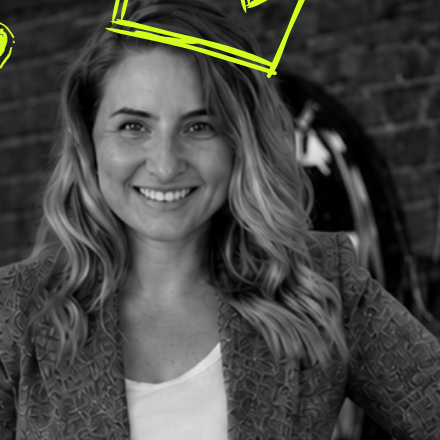
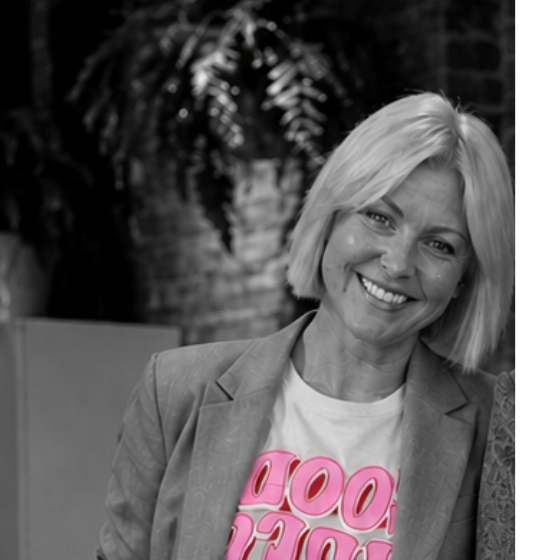
This is also where you include anything that tends to get misrepresented. For us, that means being clear that we - Mia and Kristen together - run both Evolution (our coaching container) and Hive AI (our monthly AI membership). Not one or the other. Both, together. Getting that detail right in the Motherboard means we never have to correct it again.
Your working style
This layer is the one most people skip. It's also the one that makes the biggest difference for a neurodivergent brain. You're telling AI how to work with you - not just what to produce.
Do you need bullet points, not walls of text? Do you want it to ask you questions before diving in, or just give you the thing straight? Do you need a quick win first to build momentum before tackling the hard stuff? Do you want it to flag when you're spiralling, or just redirect gently? These preferences live here.
Where to save your Motherboard
Give it one home that isn't locked inside any single AI. We keep ours in Notion: the documents live there as the single source of truth, and both Claude and ChatGPT connect straight into Notion, so whichever chat window you open, the Motherboard comes with you. One place to update it, no digging through settings menus, and if you ever switch tools, your brain moves with you.
You can also load a copy into the AI itself - useful, just treat it as the copy, not the original:
- Claude: Use Projects - create a project, upload your three documents (or connect Notion), and every conversation inside that project has full context automatically.
- ChatGPT: Use a Project, Custom Instructions or the memory feature - or connect Notion there too.
- Any tool: Keep a plain text document with your full Motherboard and paste it at the start of any new chat as your "system setup." Not as elegant, but it works.
The goal is that you never have to explain yourself twice. That's the whole point.
Want us to walk you through this?
Inside Evolution, we run a live Motherboard setup session as part of onboarding. Plain English, no jargon - and you leave with yours actually built, not just the theory.
Explore Evolution →What feeds your Motherboard (the inputs that make it richer over time)
Your Motherboard isn't a one-and-done document. It grows as your business does. And the fastest way to build it up is to capture the things that already come naturally to you - your voice, your thinking, your client conversations - and let AI learn from them.
Voice notes
If you're anything like the founders we work with, your best thinking happens in the car, in the shower, or at the kitchen bench at 4pm. Not at a desk. The problem isn't the thinking - it's getting it out of your head and into a format you can use. A voice-to-text tool solves this. We use Whisper Flow - you hold a key and talk, it types directly into whatever app you're in. Transcript done. Feed it to your AI. Done.
Meeting and client call notes
The things your clients say in calls are gold for your Motherboard. Their exact words, their actual problems, the way they describe what they need before they knew how to ask for it. A tool like Granola turns your meetings into clean, usable notes automatically - so you're capturing that language without scrambling to write it down mid-conversation. Those client phrases become part of the brief you give AI. The result is copy that sounds like it was written for a real person, because it was.
Real examples of your work
Paste your best posts, your favourite emails, your most "that sounds exactly like me" pieces. Let AI read them and reflect your style back. The more examples you give, the more precisely it learns. This is your voice in context - not described, but demonstrated.
What changes when you actually do this
This is the part people are always surprised by. Not because it's complicated - it's genuinely not. Because it's so simple that it seems like it can't be this impactful.
When your Motherboard is built, you stop starting from scratch. Every prompt you write lands on fertile ground instead of empty air. AI stops suggesting you "focus on your unique value proposition" (whatever that means) and starts writing in your actual words about your actual business for your actual people.
You stop editing for tone and start editing for preference. That's a different category of work. It's faster, it's less draining, and it actually sounds like you.
And for a brain that burns out on repeating itself - a brain that finds the blank page exhausting, not exciting - this matters more than any productivity hack or shiny new model ever could.
You are not bad at AI. Your AI just doesn't know you yet. Fix that first. Everything else after that is easy.
- The reason AI feels generic is not the tool - it's the absence of a foundation that tells it who you are.
- The Motherboard is three layers: your voice and identity, your business context, and your working style.
- Build it once. Give it a home in Notion and connect your AI to it. Never start from scratch again.
- Feed it over time with voice notes, client call transcripts, and real examples of your best work.
- The ADHD tool-hopping loop is a signal that the foundation hasn't been built - not a signal to buy a new app.
Frequently asked questions
An AI second brain is a set of context documents you save into your AI assistant so it understands you without re-explaining yourself every session. For ADHD entrepreneurs, this means telling the AI your voice, your business, your audience and how you work - once. From that point on, every response is calibrated to you, not a generic stranger. We call ours the Motherboard.
Three layers. First, your voice and identity - how you speak, what you believe, what you sound like. Second, your business context - what you do, who you serve, your offers. Third, your working style - how your brain operates, what you need from AI, your preferred formats. Give them a home in Notion so any AI can tap into them, or save them into your AI tool's project settings. Do it once and every future session is smarter from the start.
Because a new tool gives a dopamine hit - and because when AI doesn't know who you are, it produces flat, generic output that feels frustrating. That frustration reads like "wrong tool," but it's almost always "missing foundation." Build the Motherboard first and the tool you already have starts working properly. The shiny new app rarely changes anything, because the problem was never the tool.
✨ How this was made: This post was created with AI, working from our own ideas, opinions, frameworks, offers, content and voice, and pulling from our second brain. We always check our work before we publish. Human led. AI powered.